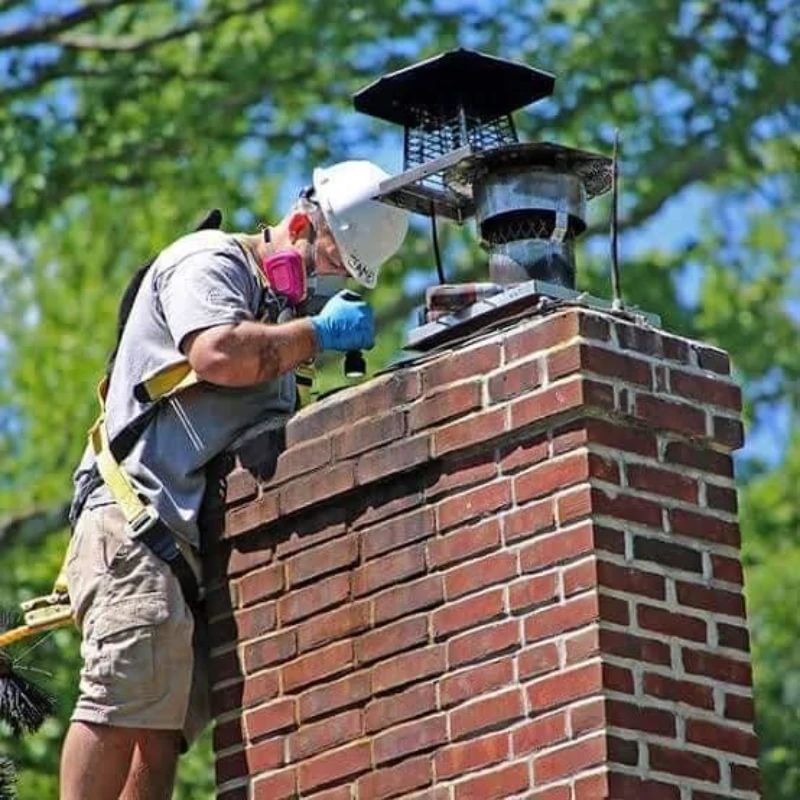
NFI certified gas fireplace service and CSIA chimney sweep for all Five Forks neighborhoods. Newer homes here have builder-grade gas fireplaces that need annual service — not a one-time install and forget.
Five Forks developed rapidly in the 2000s and 2010s as one of Greenville County's most active master-planned growth corridors. The homes built during this period — predominantly in the $300K–$600K range — were delivered with direct-vent gas fireplaces as a standard or upgrade feature. These units were sold by builders who presented them as low-maintenance amenities. They are not maintenance-free. An NFI Gas Specialist annually inspects and services what the builder installed — because the people who sold you the house moved on to the next development long ago.
The core Five Forks area along Five Forks Road and Woodruff Road contains dense subdivision development from the early 2000s to mid-2010s. These homes were built with direct-vent gas fireplaces — sealed combustion units that draw outside air through a co-axial vent pipe and exhaust through the same assembly. The exterior termination cap on these systems sits low on the exterior wall or in a recessed alcove where debris, wasp nests, and spider webs accumulate and partially block airflow. Blocked termination = reduced oxygen supply = incomplete combustion = carbon monoxide risk.
The larger estate-section homes in Five Forks built by custom builders in the late 2000s and 2010s more frequently include masonry fireplaces or high-end factory-built wood-burning fireplaces as a design feature. These homeowners often use the fireplace seasonally for ambiance rather than as a primary heat source — and frequently go two to three seasons without service. Even occasional use deposits creosote and requires annual inspection to confirm the liner and crown are intact.
The Woodruff Road corridor through the Five Forks area has continued to see new construction into the 2010s and early 2020s. The newest homes here have the most current gas fireplace technology — some with electronic ignition and wall-switch controls rather than standing pilots. Even modern ignition systems require periodic cleaning of the burner and inspection of the venting assembly. Electronic ignition components have their own wear patterns that annual service catches before the unit stops lighting altogether.
The southern portion of Five Forks blends into northern Simpsonville along the Fairview Road and Fork Shoals Road corridors. Homes in this overlap zone span a slightly wider age range — some 1990s construction mixed with 2000s and 2010s builds — producing a mix of early direct-vent gas fireplaces (older Heatilator and Heat-N-Glo units) and more current brands. Older direct-vent units from the late 1990s and early 2000s may have thermopile or thermocouple assemblies approaching the end of their service life, resulting in pilot outage or ignition failure.
Every gas fireplace annual service call in Five Forks is performed by an NFI Gas Specialist. Here is what that includes — the things that the builder's HVAC crew did not check and your home warranty did not cover after year one.
The co-axial vent termination on the outside wall is inspected for blockage from wasp nests, debris, spider webs, and bird activity. Partial blockage affects combustion quality and can trap carbon monoxide.
Burner ports accumulate dust, pet hair, and combustion residue over time. Clogged ports produce uneven flame patterns and incomplete combustion. We clean the burner assembly and reposition log sets to manufacturer spec.
The pilot assembly and thermocouple or thermopile are inspected for wear, corrosion, and function. A weak thermocouple causes intermittent pilot outage — the unit lights, then goes out. This is the most common gas fireplace service complaint we receive.
The ceramic glass front panel of a direct-vent unit accumulates white haze from combustion byproducts. We clean the glass with the correct non-abrasive cleaner to restore clarity — the glass type requires specific products to avoid scratching.
The gas valve operation and supply line connections are inspected. We verify that the manual shut-off is accessible and functional — many homeowners do not know where their gas fireplace shutoff is located until they need it in an emergency.
The fireplace is started and run through a full operating cycle. Flame color, height, and distribution are evaluated. Any anomalies are documented and explained. The unit is confirmed operational before we leave the property.
NFI certified annual service for the direct-vent and B-vent gas fireplaces in Five Forks' newer homes. Vent cap inspection, burner cleaning, pilot system service, glass cleaning, and full function test.
View serviceProfessional dryer vent cleaning for Five Forks homes. Many Five Forks floor plans route the dryer vent through multiple elbows to reach the exterior — longer runs with more bends trap lint faster. We clear the full run and test airflow.
View serviceFor Five Forks custom homes with masonry or factory-built wood-burning fireplaces. Annual sweep, creosote stage assessment, and Level 1 inspection to confirm the liner and crown are intact for the upcoming burn season.
View serviceLevel 1 visual inspection included with every sweep. Level 2 camera inspection available for Five Forks homes returning a wood-burning fireplace to active use after an extended dormant period.
View serviceCrown repair, flashing repair, and damper service for Five Forks masonry chimney systems. Even newer masonry chimneys develop crown cracks and flashing separation within the first decade from thermal cycling and seasonal movement.
View service24/7 emergency response for Five Forks addresses. Chimney fires, carbon monoxide concerns, and sudden draft failure all receive priority dispatch. Call (864) 794-6932 at any hour for immediate assistance.
View serviceNFI certified gas fireplace annual service and dryer vent cleaning for Five Forks neighborhoods. Call during business hours or anytime for emergency service.