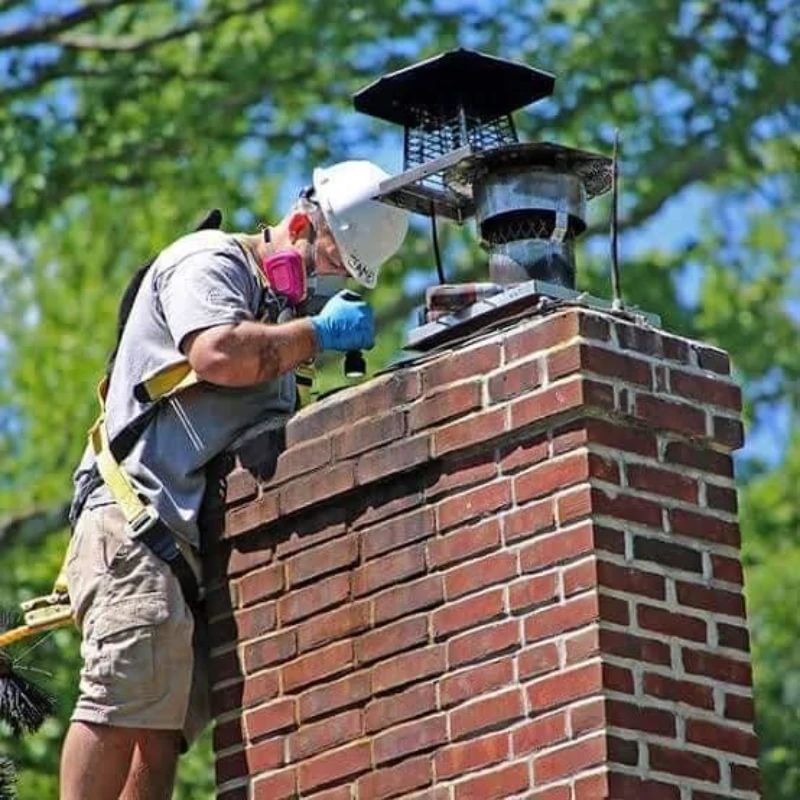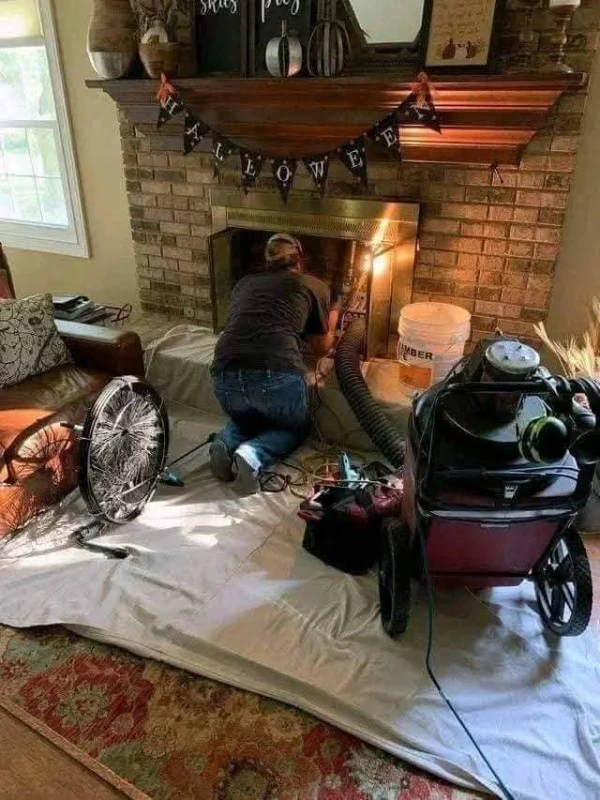
CSIA certified chimney sweeps serving North Main's craftsman bungalows and foursquare homes. Original 1920s–1940s fireplaces, clay tile liners, heavy creosote — handled by technicians who know the neighborhood.
North Main is one of Greenville's most storied residential corridors — a streetcar neighborhood developed primarily between 1910 and 1945, lined with craftsman bungalows, foursquare homes, and Colonial Revival houses. Nearly every original home on these blocks was built with an active masonry fireplace.
North Main bungalows typically feature a prominent living room fireplace with an original masonry surround, hearth, and clinker brick or standard red brick chimney. The fireplace was a design focal point — often the widest feature in the room. These fireplaces were designed to burn coal or wood and were in daily use for decades before the transition to gas heating in the 1950s and 1960s.
Homes built in the 1910s–1930s in North Main are approaching 100 years old. Original clay tile liners in these chimneys have been through generations of thermal cycling — expanding and contracting with each fire. Many have developed hairline cracks in tile sections or mortar joint separation between tiles. A camera inspection is the only definitive way to assess liner condition.
The flue size ratios on 1920s fireplace chimneys were designed around different fuel types and burn rates than modern wood stoves. When these fireplaces are used with today's wood-burning practices, particularly slow-burning or unseasoned wood, they can accumulate creosote faster than a properly sized modern flue. Annual cleaning prevents Stage 2 and Stage 3 buildup.
The throat dampers installed in North Main homes during the 1920s–1940s were cast iron — built to last, but not to last 100 years. Many have corroded, warped, or partially seized in the open or closed position. A stuck-open damper wastes heat all winter. A stuck-closed damper is a carbon monoxide hazard if the fireplace is used. Replacement is confirmed on-site at a set price before any work begins.
Creosote stages determine the cleaning method required. North Main bungalow chimneys — particularly those with narrower pre-1930 flue geometries — tend toward Stage 2 and Stage 3 buildup with regular wood burning use.
Gray or black flaky deposit, easily removed with a standard chimney brush. Typically present in chimneys cleaned annually with proper wood burning practices.
Dark, hardened, shiny deposit. Can't be fully removed with a standard brush — requires rotary drill system and chemical treatment. More common in older bungalow chimneys when cleaning has lapsed.
Thick, tar-like coating that drips and hardens into a glazed layer. Highly flammable. Requires repeated chemical treatment and mechanical removal or relining in severe cases.
All standard procedures on every appointment — no shortened visits, no skipped steps.
Every service we offer is available in the North Main neighborhood. Same certified technicians, same standards as every other area we serve.
Full creosote removal — Stage 1, 2, and 3. HEPA containment. Written report every visit. Approx. $149–$229 single flue.
Video inspection of clay tile liner interior. Highly recommended for all North Main homes built before 1950. Full written report provided.
Mortar joint restoration using lime-compatible mortar. Crown repair, flashing correction. All pricing confirmed before starting.
When original clay tile liner has deteriorated past safe use, stainless flex liner installation brings the flue into code compliance.
Vapor-permeable waterproofing sealer for soft brick masonry. Blocks liquid water while allowing the chimney to breathe. 51 inches of Greenville rainfall per year.
Longer vent runs in older North Main homes create more lint traps. Full brush cleaning with airflow verification on completion.
CSIA certified chimney cleaning for North Main craftsman bungalows and foursquare homes. Original clay tile liners, cast iron dampers, heavy creosote — one call reaches a certified technician who knows your chimney.